Uninsured Motorist Coverage in Chicago - Why It Matters
Chicago drivers face a real and measurable risk every time they get behind the wheel: a significant share of other drivers on the road carry no insurance at all. Uninsured motorist coverage is the financial buffer that protects you when the at-fault driver can't pay. Without it, recovering medical bills, lost wages, or vehicle repair costs after an accident caused by an uninsured driver falls largely on you.

What Is Uninsured Motorist Coverage
Uninsured motorist coverage, often abbreviated UM, pays for your injuries and sometimes your property damage when another driver causes an accident and carries no liability insurance. Most policies also include underinsured motorist coverage, referred to as UIM, which activates when the at-fault driver has insurance but not enough to cover your actual losses.
A standard UM policy in Illinois has two components. Bodily injury coverage handles medical treatment, lost income, and pain-and-suffering claims for you and your passengers. Property damage coverage handles repairs to your vehicle when the at-fault driver has no policy to tap.

The Uninsured Driver Problem in Illinois
Approximately 12 to 13 percent of Illinois drivers are uninsured at any given time. On a busy Chicago expressway or city street with hundreds of surrounding vehicles, those odds translate to a concrete, everyday exposure. Chicago's dense traffic, high accident frequency, and urban driving conditions make that percentage feel much closer to home than a statewide statistic might suggest.
Chicago also ranks consistently among the top 10 most vehicle-theft-affected major U.S. cities. Theft itself is covered by the comprehensive portion of a full coverage policy, not by UM coverage, but the same environment that produces high theft rates also correlates with higher rates of uninsured driving. The two risks often travel together.
How This Affects a Real Accident Scenario
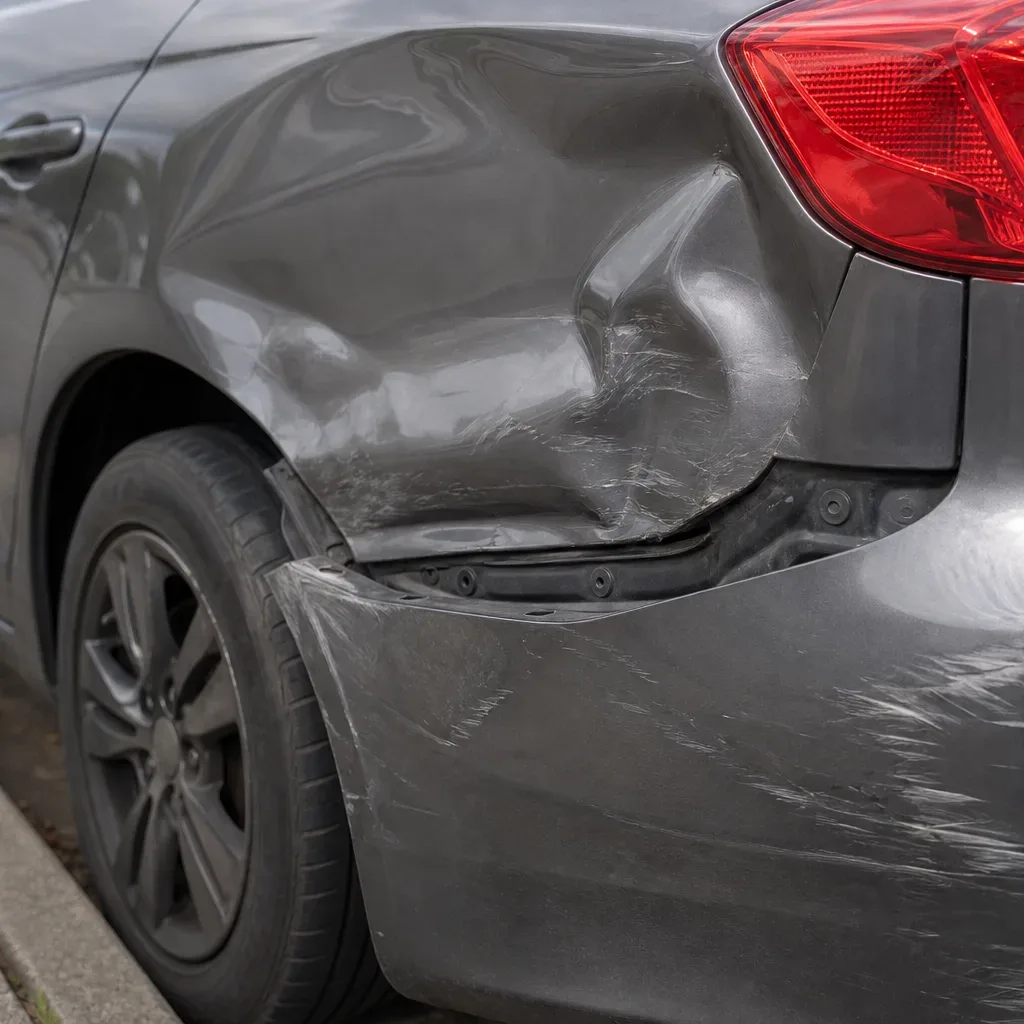
Imagine being rear-ended at a red light on the Dan Ryan. The other driver is at fault, but they carry no insurance. Without uninsured motorist coverage on your own policy, you would need to pursue the driver personally in civil court to recover anything, a process that is slow, expensive, and often yields nothing if the driver has no assets. Your UM coverage steps in immediately, handling your medical bills and vehicle damage through your own insurer.
That scenario plays out regularly in Chicago. UM claims are not rare edge cases here; they are a routine part of how Chicago insurers manage claims volume.

Do I Need Uninsured Motorist Coverage in Illinois
Illinois law requires insurers to offer uninsured motorist bodily injury coverage on every auto policy, and drivers must explicitly reject it in writing if they choose not to carry it. That legal structure signals how seriously Illinois treats the uninsured driver problem.
While UM coverage is not technically mandatory in the same way liability-only coverage is, rejecting it is rarely a sound financial decision in Chicago. Illinois mandates that you carry at least $25,000 per person and $50,000 per accident in liability coverage for bodily injury to others, along with $20,000 in property damage. That 25/50/20 floor protects other people from you. UM coverage protects you from everyone else.
Drivers who carry only liability-only coverage have zero protection if an uninsured driver hits them. Adding UM to a policy is relatively inexpensive compared to the potential out-of-pocket exposure from a single serious accident.
Uninsured Motorist Coverage Limits in Chicago
Your UM limits should at minimum match your liability limits, and many Chicago insurance advisors recommend going higher given local traffic density and medical cost levels. Common limit pairings for Chicago drivers are $100,000 per person and $300,000 per accident for bodily injury.
Underinsured motorist coverage, the companion to UM, is equally worth maximizing. Many drivers in Illinois carry only the minimum 25/50/20 liability. If one of those minimally insured drivers causes a serious accident that results in $80,000 in medical bills, their $25,000 per-person limit covers less than a third of your costs. UIM coverage bridges that gap.
Higher UM and UIM limits do increase your premium, but the incremental cost between moderate and high limits is often modest. Getting a quote for both $100,000 and $250,000 per-person limits side by side makes the cost difference concrete.
How Uninsured Motorist Coverage Fits Into Your Full Policy
Full coverage in Chicago, meaning collision plus comprehensive plus liability combined, typically runs $1,800 to $2,200 per year. That range already positions Chicago drivers well above the Illinois statewide average of $1,300 to $1,600 per year for the same coverage tier.
UM and UIM are add-ons that sit inside that policy structure. They do not replace collision coverage. If you are hit by an uninsured driver and your UM property damage limits are lower than the repair cost, your collision coverage can fill the gap, subject to your deductible. Understanding how the two interact helps you avoid coverage gaps.
Stacking Coverage in Illinois
Illinois allows "stacked" uninsured motorist coverage on policies that cover multiple vehicles. Stacking multiplies your per-vehicle UM limits by the number of vehicles on the policy. A household with three vehicles and $100,000 per-person UM limits on each could stack to $300,000 in effective coverage per person. Not every insurer offers stacking, so it is worth asking directly when comparing policies.
What to Look for When Comparing Policies
Not all UM policies are structured the same way. Some insurers include uninsured motorist property damage with a deductible; others waive it. Some policies require you to identify the uninsured vehicle to file a UM claim, which can complicate hit-and-run situations. Confirm explicitly that your policy covers hit-and-run accidents before you assume it does.
Review your policy's arbitration clause as well. Many UM disputes between a driver and their insurer go to binding arbitration rather than court. Knowing that process exists, and what it costs, helps you evaluate insurer reputation before you buy rather than after you file.
Young drivers in Chicago face an additional consideration. Premiums for drivers under 25 already run 50 to 100 percent above the standard adult rate. Carrying adequate UM limits at that premium level is still worthwhile because the financial consequences of an uninsured motorist accident can far exceed any annual premium savings from reducing limits.
Frequently Asked Questions
What Is Uninsured Motorist Coverage?
Uninsured motorist coverage, or UM, pays for your injuries and property damage when a driver who has no insurance causes an accident. Most policies pair it with underinsured motorist coverage, which applies when the at-fault driver has insurance but not enough to cover your full losses.
Do I Need Uninsured Motorist Coverage in Illinois?
Illinois law requires insurers to offer UM coverage on every policy, and you must reject it in writing if you don't want it. While it isn't technically mandatory like liability-only coverage, skipping it in Chicago is risky given that approximately 12 to 13 percent of Illinois drivers are uninsured.
What Uninsured Motorist Coverage Limits Should Chicago Drivers Carry?
Most Chicago insurance advisors recommend UM limits of at least $100,000 per person and $300,000 per accident for bodily injury, and suggest matching your UM limits to your liability limits at a minimum. Higher limits add modest cost but significantly increase your protection against drivers carrying only Illinois' minimum 25/50/20 liability coverage.
Does Uninsured Motorist Coverage Apply to Hit-and-run Accidents in Chicago?
It depends on your specific policy. Many UM policies cover hit-and-run accidents, but some require you to identify the other vehicle before a claim can be filed. Always confirm this detail with your insurer before purchasing, since hit-and-run incidents are a real risk in high-traffic urban areas like Chicago.
How Much Does Adding Uninsured Motorist Coverage Affect My Premium in Chicago?
Adding UM and UIM coverage to a policy in Chicago increases your premium, but the incremental cost is typically modest relative to the protection it provides. Chicago full coverage policies already average $1,800 to $2,200 per year, and the cost difference between moderate and high UM limits is often small enough to be worthwhile when compared side by side in a quote.